How to document storm damage so your claim actually gets paid
What to photograph, when to photograph it, and what to write down. The documentation that decides a claim is nearly all captured in the first week.

Claims are decided on evidence, and nearly all of the evidence that matters is available in the first week — then disappears. Water dries. Debris gets cleared. Walls get closed. The difference between a claim that pays and one that argues is usually just what somebody thought to photograph before the clean-up started.
Photograph in four passes
- Wide, from outside. Every elevation of the building, plus the roof if it is safe to see it. These establish the overall event and the date.
- Wide, from inside each room. Stand in the doorway. One frame that shows the whole room, so that later close-ups can be located.
- Close on every damaged element. The stain, the crack, the lifted plank, the missing shingle. Get near enough that the damage is unmistakable.
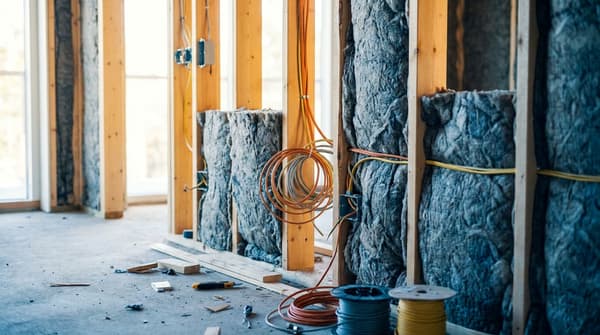
- Open construction. Once demolition starts, photograph everything the finishes were hiding — wet insulation, rusted fasteners, rotted sheathing, damaged framing.
It is also the one that carries the most money. Hidden damage is the largest single category missing from most scopes of loss, and once the wall is closed the only evidence it ever existed is a photograph somebody remembered to take.
What a useful photograph has in it
- A sense of scale. A tape measure, a ruler, or a familiar object in frame. "A crack" means nothing; "a crack 40 inches long" means something.
- Its location. Either visible in the frame or written in the caption. A photograph of unidentifiable wet drywall helps nobody.
- The date. Phone photographs carry this automatically in the file metadata — which is a reason to keep the originals rather than screenshots.
- Context. At least one wider shot that connects the close-up to the room it is in.
A note on metadata: photographs from a phone contain the date and often the location. That is useful evidence, and it is also personal data about your home — worth knowing that when you upload photographs to Punchlist360 the location data is stripped while the images stay full quality.
Write things down the same day
Memory is not evidence, and eighteen months later you will not recall which day the roofer first came, or what the adjuster said on the phone. Keep a running log with dates:
- When the damage happened, and when you first reported it
- Every conversation with the carrier — date, who, and what was agreed
- When each contractor attended and what they did
- When the property was made safe, dried out, or boarded up
- Any day work could not proceed, and why
On a construction project this is a daily log, and it is the document lawyers ask for first in any dispute about delay or responsibility.
Keep the receipts from day one
Emergency mitigation — tarps, boarding, drying equipment, a hotel while the house is uninhabitable — is usually covered, often under a separate part of the policy from the repair itself. It is also the spending most likely to happen in a rush, get paid on a personal card, and never make it into the claim. Here is what counts and how to file it.
Do it once, in one place
The practical failure is not that people do not document. It is that the documentation ends up in four places: photographs on a phone, receipts in a drawer, notes in a notebook, and emails in a thread. When the adjuster asks a question, assembling the answer takes an evening, so it does not happen, and the claim quietly settles for less.
Anything that keeps the photograph, the receipt and the note attached to the same item will beat a better-organised set of separate piles.
Common questions
What photographs do insurance companies want for storm damage?
Wide shots of every elevation and every affected room, close-ups of each damaged element with something in frame for scale, and — most importantly — photographs of open construction before walls are closed back up.
Should I clean up before the adjuster visits?
Make the property safe and prevent further damage, which your policy usually requires. But photograph everything thoroughly first, and keep damaged materials where practical.
Do phone photographs count as evidence?
Yes, and their embedded date information is useful. Keep the original files rather than screenshots or messaging-app copies, which strip that data and reduce quality.
Keep all of this in one place
Punchlist360 is the punch list, the photographs, the budget and the insurance claim file for your build — so the record exists as a by-product of doing the work. $9.99 a month, cancel any time. Contractors you invite are free.
See how it works More guidesRead next
 What is a scope of loss, and how do you read yours?The scope of loss is the carrier's line-by-line description of your repair. Learn how to read one, what the abbreviations mean, and how to spot the lines that are missing.
 Why your insurance claim was underpaid — and what to do about itMost underpaid claims are not a conspiracy. They are an arithmetic gap between the carrier's scope of loss and what the work actually costs. Here is how to find the gap and prove it.
 Keeping receipts for an insurance claim: what counts and how to file itWhich spending belongs in a claim, which does not, and how to file receipts so the claim can actually be proved.
 Photographs: the difference between "I told you" and proofOn a construction job or an insurance claim, the photograph is the argument. Here is what to take, when, and how to keep it findable.